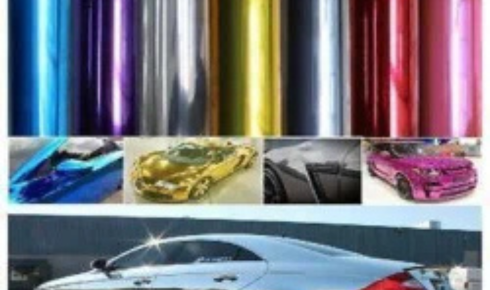
Most people notice the colors first. The bold logo, the clean lines, the way everything seems to flow perfectly across the surface of a vehicle. It looks effortless — like it just belongs there.
But if you’ve ever looked a little closer, or maybe run your hand along the surface, you start to realize something else is at play. There’s a texture, a depth, a quiet precision that doesn’t happen by accident.
A great wrap isn’t just about design. It’s about what lies underneath.
It’s Not Just a Print — It’s a Material Choice
We tend to think of wraps as printed graphics, and sure, that’s part of it. But the real foundation is the material itself. Without the right base, even the best design can fall flat.
That’s where vinyl materials come into the picture. They’re flexible enough to contour around curves, durable enough to handle sun and rain, and surprisingly forgiving when applied by skilled hands.
What’s interesting is how much difference quality makes here. Two wraps might look identical on day one. But give it a few months — exposure to heat, dust, everyday wear — and the difference starts to show.
One fades. The other holds.
Why Not All Wraps Feel the Same
There’s a subtle but noticeable difference between wraps that feel “cheap” and those that don’t. It’s not always something you can immediately explain, but you can sense it.
Part of that comes down to the type of wrap materials being used. Thickness, adhesive quality, finish — all of these factors play a role in how the wrap behaves over time.
A thinner material might be easier to install quickly, but it may not last as long. A stronger adhesive might hold better, but if it’s too aggressive, it can make removal difficult later.
It’s a balancing act. And the best results usually come from materials that strike that balance just right.
The Quiet Importance of Finish
Finish is one of those details people notice without realizing it. Glossy wraps catch light differently than matte ones. Satin finishes sit somewhere in between, offering a softer, more understated look.
Then there are textured options — carbon fiber, brushed metal — each adding a layer of personality to the vehicle.
This is where premium vinyl really stands out. It doesn’t just look good initially; it maintains that look over time. Colors stay richer, surfaces stay smoother, and the overall finish feels more refined.
It’s a bit like the difference between fast fashion and something well-made. Both serve a purpose, but one tends to hold up better in the long run.
Installation Changes Everything
Even the best material can fall short if it’s not installed properly. That’s something people don’t always consider.
Wrapping a vehicle isn’t as simple as applying a sticker. It involves careful alignment, controlled stretching, and a lot of attention to detail. Edges need to be sealed properly. Air bubbles need to be worked out. Seams need to be nearly invisible.
And all of that depends on how the material responds during the process.
High-quality vinyl tends to be more forgiving. It allows installers to reposition sections if needed, to smooth things out without damaging the surface. Lower-quality materials? Not so much.
Durability in the Real World
Vehicles don’t live in controlled environments. They’re out there — under the sun, in the rain, on dusty roads, in changing temperatures.
That’s where material choice really proves its worth.
A good wrap doesn’t just look good in a garage. It holds up on highways, in parking lots, through daily wear and tear. It resists fading, peeling, cracking — all the things that can turn a once-great design into something forgettable.
And when it does eventually need to be removed, quality materials make that process smoother, leaving the original paint intact.
The Balance Between Cost and Value
It’s tempting to focus on upfront cost when choosing a wrap. And that’s understandable — budgets matter.
But wraps aren’t just a short-term expense. They’re something you live with, something people see every day. Cutting corners on material might save money initially, but it can lead to more frequent replacements, repairs, or even damage to the vehicle’s surface.
In that sense, it’s less about cost and more about value over time.
A Final Thought
When people admire a well-wrapped vehicle, they rarely think about the material behind it. They see the design, the colors, the overall effect.
But that effect is built on something deeper — choices made before the design was even printed. Decisions about quality, durability, and how the wrap will perform in the real world.
And maybe that’s what makes it so interesting. The best wraps don’t just look good. They’re built to stay that way.
Quietly, consistently, without needing to prove it.