Water is probably one of the most overlooked parts of a home. We notice the countertops, flooring, paint and appliances, but the water running quietly through the walls rarely gets much attention. That changes pretty quickly when the water starts tasting strange, leaves white spots on the faucet, or makes the shower feel less pleasant than it used to.
Those little signs can be frustrating, but they can also tell you something useful: your household water may need a closer look.
The good news is that water treatment doesn’t have to mean installing every piece of equipment available. The smartest approach is usually much simpler. Understand the water, identify the actual concern, and choose treatment that matches the problem.
Start With a Water Test
Before spending money on a filtration system, it’s worth finding out what you’re dealing with.
Water quality can vary considerably from one property to another. Municipal water and private well water have different characteristics, and even homes in the same neighborhood may experience differences because of plumbing or local conditions.
A water test can provide useful information about hardness, pH, sediment, minerals and other measurable characteristics. Once you have those results, it’s much easier to understand whether filtration, softening or another treatment approach makes sense.
Without testing, it’s easy to buy a system simply because someone says it worked for them. But your water may have a completely different problem.
What Whole-House Filters Actually Do
Homeowners often hear the term Whole House Filters and assume that one system removes absolutely everything from the water.
That’s not quite how it works.
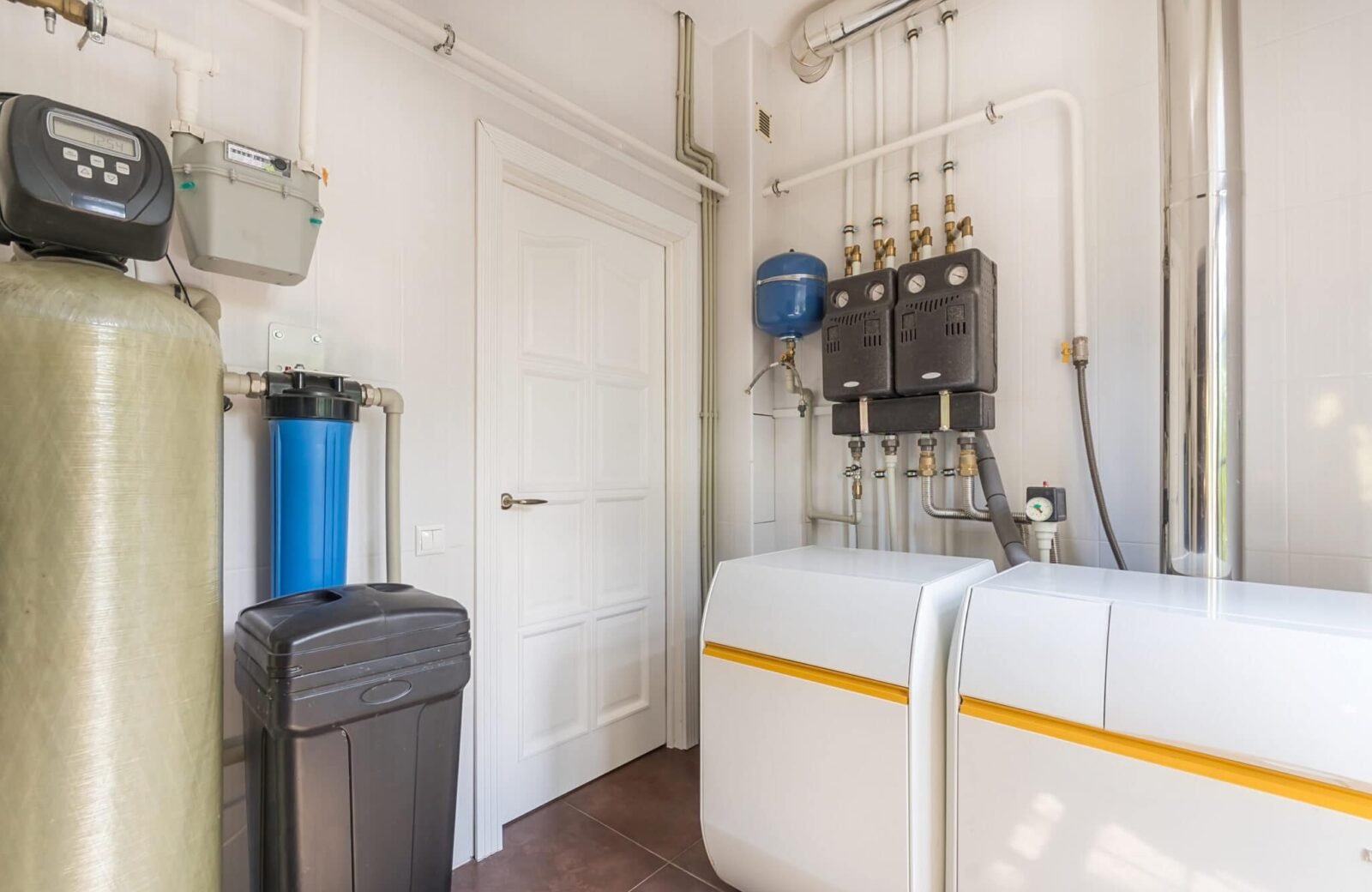
Whole-house filters are designed to treat water as it enters the home, but the exact substances they reduce depend on the filtration technology. A sediment filter, for example, is designed to capture particles. Carbon filtration may be used to improve taste and odor and reduce certain substances.
The benefit is convenience.
Instead of putting a filter on every faucet, a whole-house system can provide treatment through a central point in the plumbing. Water used for showers, sinks, laundry and other household activities can pass through the treatment system.
For families concerned about broader water quality, this can be an attractive solution.
But don’t buy a system simply because the words “whole house” sound comprehensive. Look at the actual specifications and make sure the system is appropriate for your water.
Hard Water Is a Different Problem
Hard water is another common issue, and it can be surprisingly persistent.
Water hardness is mainly associated with minerals such as calcium and magnesium. These minerals can create scale on faucets, showerheads and appliances. They may also make soaps and detergents less effective.
If you’ve ever scrubbed a shower door only to see cloudy mineral spots return a few days later, you know what we’re talking about.
This is where Water Softeners can be useful. Unlike a standard filter, a water softener is designed specifically to address hardness minerals.
The effects can show up in everyday tasks. Soap may rinse more easily, fixtures can experience less scale buildup, and laundry may feel different after washing.
However, not every home needs a softener. If hardness isn’t a significant concern, installing one may add unnecessary cost and maintenance.
Again, testing first makes the decision much easier.
Drinking Water Needs Can Be More Specific
Whole-home treatment and drinking-water treatment aren’t always identical.
Your family might be perfectly happy with the water used for showers and laundry but still dislike the taste of tap water. In that situation, a dedicated drinking-water system may be a more practical investment.
Drinking Water Systems are designed to treat water at the point where it’s consumed, often through a dedicated faucet in the kitchen.
Depending on the technology, these systems can target taste, odor and certain contaminants. Reverse osmosis is one commonly used approach for more intensive drinking-water treatment, while carbon-based systems are often selected for taste and odor concerns.
The important thing is to know what the particular system is designed to do.
Don’t assume that every drinking-water filter removes the same things. Read the specifications, look for relevant certifications, and ask questions if something isn’t clear.
Can You Combine Different Systems?
Absolutely.
In fact, some homes benefit from a combination of treatment methods.
For example, a household dealing with hard water throughout the property might use a softener for the whole home and a separate drinking-water system at the kitchen sink.
Another property might need sediment filtration before a different treatment stage. A well-water home could have different requirements again.
This isn’t necessarily overkill. It’s about assigning each system a specific job.
Think about it like layers. One component handles one issue, another handles something else, and the result is a treatment setup designed around the home’s actual conditions.
Don’t Forget Flow Rate
Here’s a technical detail that’s easy to overlook: flow rate.
Imagine taking a shower while someone starts the washing machine and another person turns on a faucet. If your filtration equipment can’t handle the household’s peak demand, you may notice reduced water pressure or flow.
When choosing a whole-house system, consider household size, number of bathrooms, typical water consumption and peak usage.
A professional installer should be able to help calculate the appropriate capacity rather than simply recommending the largest unit available.
Bigger isn’t always better. Correctly sized is better.
Installation and Maintenance Matter
Even excellent equipment won’t perform properly if it’s installed poorly.
Water treatment systems can involve plumbing connections, valves, drains, bypass arrangements and other components. Installation should be done carefully, with enough attention to future maintenance.
Ask what routine servicing involves before you buy.
How often are filters replaced? Does the softener need salt? How much do replacement cartridges cost? Does the provider offer service visits?
These questions may feel boring during the buying process, but they’ll become very interesting six months later when something needs attention.
A reliable system is one you can realistically maintain.
Don’t Choose Based Only on Price
Price matters, but it shouldn’t be the only deciding factor.
The cheapest system may require frequent replacements or fail to address your actual water problem. Meanwhile, the most expensive system may include features you don’t really need.
Look at the full picture: performance, capacity, installation, maintenance, replacement costs, warranty and customer support.
A good water treatment investment should make sense not only on installation day but several years down the road.
Better Water Starts With the Right Questions
Choosing a water treatment system isn’t about finding the product with the longest list of features. It’s about finding the right solution for your home.
Start by testing the water. Understand the specific issues. Decide whether your priority is whole-home filtration, water softening, drinking-water improvement, or some combination of the three.
Then ask questions.
A trustworthy provider should explain why a particular system is recommended, what it can do, what it can’t do, and what you’ll need to do to maintain it.
Once everything is installed and working properly, the best part is that you may barely notice it.
The shower feels better. The water tastes fresher. Fixtures stay cleaner. Appliances have one less thing working against them.
It’s not a flashy improvement, but it’s one you’ll interact with every single day. And sometimes, the quiet upgrades are the ones that make a home feel noticeably better.